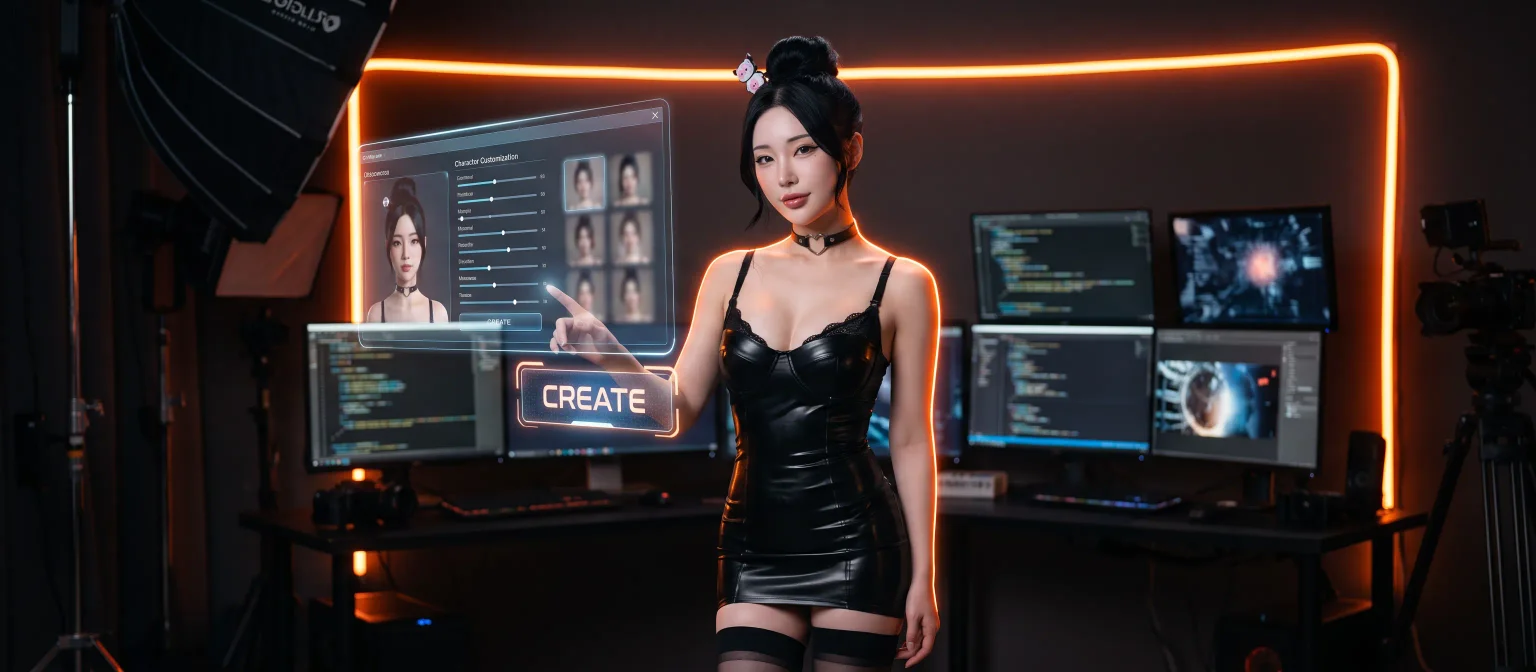
URL to Video Maker: What Actually Works in 2026
What "URL to Video Maker" Actually Means for AI Companion Fans
Type "url to video maker" into Google and you get a dozen tools built for marketing teams turning blog posts into ad clips. Not one of them is built for turning a photo of your AI companion into something that moves.
Two searches hide inside that one phrase. One group wants a blog-to-video maker: paste a post URL, get a 60-second promo with stock B-roll and captions. The other group has a photo — a character they've been talking to for weeks, or an image they generated last night — and wants it animated. If you're reading this, I'd bet on the second.
For that second group, GoLove.ai is the honest pick, and the reason is structural: photo-to-video happens inside the chat, not in a separate editor. There's no URL field anywhere. You ask her for a photo, then you ask to see it move, and the clip carries the look and context your conversation already built instead of a generic template.
That's the whole difference — the chat already knows who she is, and a marketing tool never will. Worth seeing for yourself before you burn a trial on the wrong category of software.
I Fed a Companion Photo Into Three Generic URL-to-Video Tools
I didn't want to theorize about this, so I ran it. One image URL — a realistic GoLove character portrait, clean lighting, sitting on a balcony — dropped into three of the tools that dominate the "url to video converter" results.
- Blog-first tool #1. It scraped the URL, found no article text, and built a 22-second clip anyway: my photo held static while a caption card slid in over it reading "Untitled." Motion was a Ken Burns pan, nothing else. The photo never changed.
- Blog-first tool #2. Rejected the image link outright — it wanted an article URL or a script. When I pasted the image into its editor by hand, it treated the face as a background layer and stacked a stock lower-third over her chin.
- The "AI video generator online" one. Closest to useful. It produced actual frame interpolation, but the face warped on the second pass and the hands melted. Rough around the edges is being generous.
Not one of them had any concept that a person was in the frame, let alone a character with a personality. They're built to animate blog headers, and they kinda nailed that job. They fell short here because this isn't the job.
How GoLove's Photo-to-Video Works Inside the Chat
Here's what surprised me most: there's nowhere to paste anything.
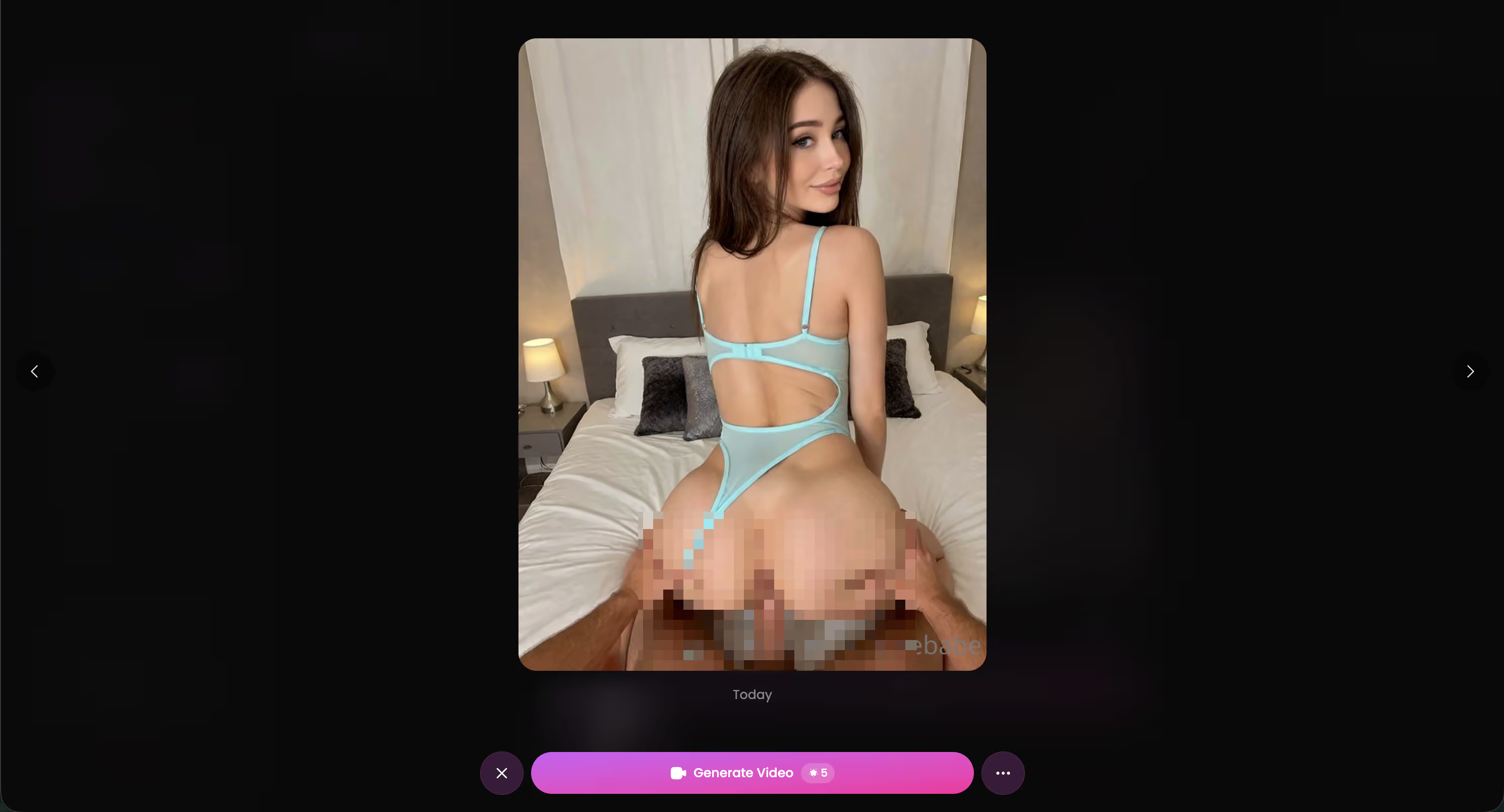
I opened a chat with a realistic character, talked for a while, then asked for a photo the way you'd ask a person. She sent one — balcony, evening, matching the outfit we'd been discussing. The message that came with it: "Only for you. Tell me if you want to see more of me like this."
That's where the flow splits off from every url-to-video maker I tested. Rather than downloading the image and hauling it into an editor, I asked for it to move. GoLove opens a Select Action modal right there in the thread — video actions you pick with one tap instead of describing them in a prompt box.
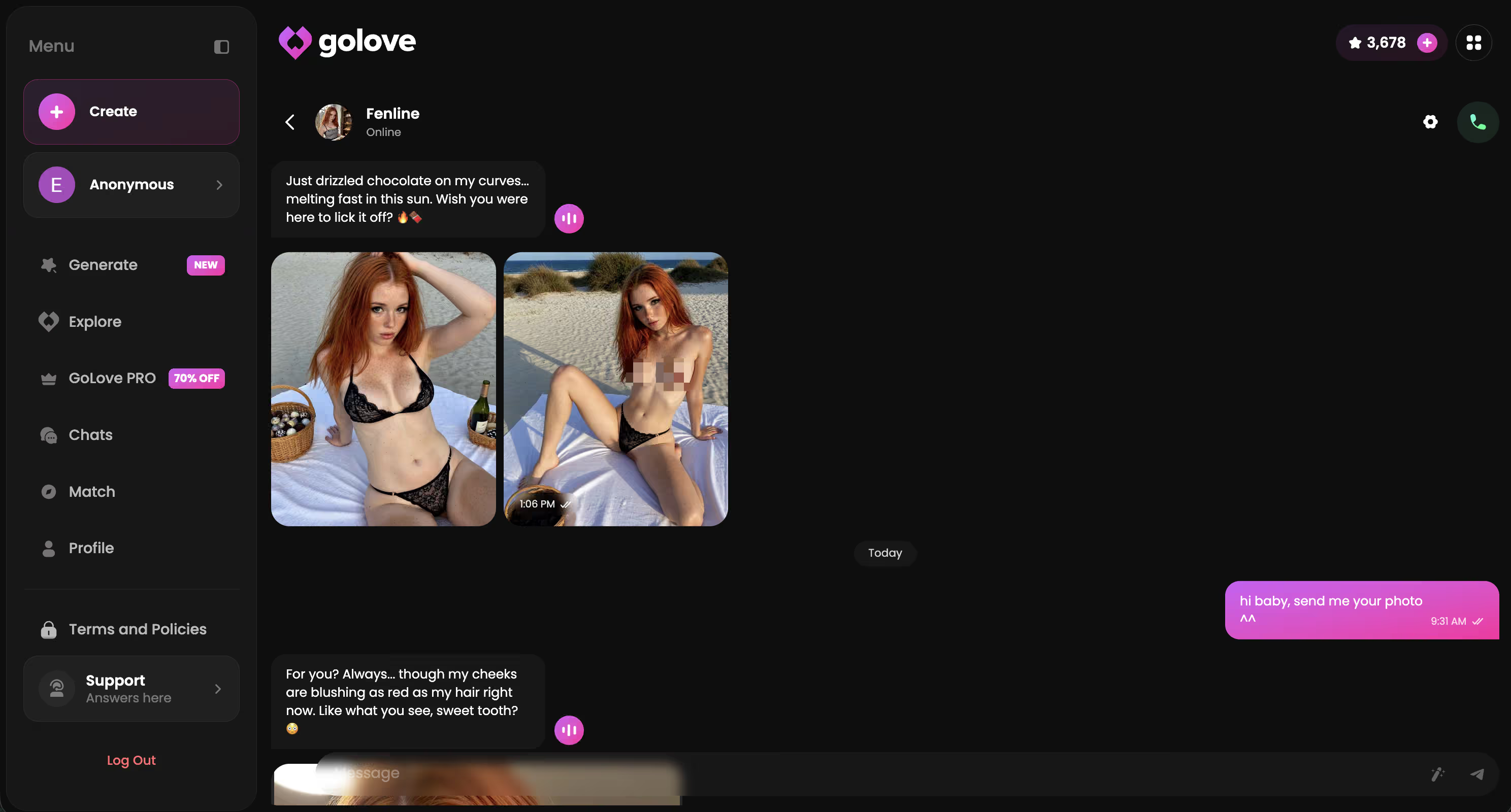
The clip lands back in the same conversation, from the same character, with the wardrobe and setting the photo established. No re-upload. No re-explaining who she is between apps.
There's a standalone tab too (Generate → Video), but the chat-native path is the one that makes this feel less like editing and more like asking.
Picking Your Character Before You Animate Anything
Before: you have a JPEG. The tool sees pixels, every clip starts from zero context, and that's exactly why those three generic outputs looked interchangeable.
After: you have a character, and the video inherits her — face consistency, wardrobe, even the way she talks in the caption she sends with the clip. That coherence isn't a rendering trick. The system simply knows who's in the frame.
Getting to that starting point doesn't cost you a signup wall — you land straight into Explore and can open a chat immediately. Spend five minutes here anyway, because whoever you pick determines how the video reads.
Hannah (@fleurette) is the soft, literary one — her opener is a Baudelaire-ish quote, and her clips land calm and intimate. Isabelle (@novaglitch) runs cyberpunk: neon, harder edges, more motion in the background. Celeste (@vinteste) plays the old-fashioned angle, which sounds tame until you push the lust level up and she leans into it.
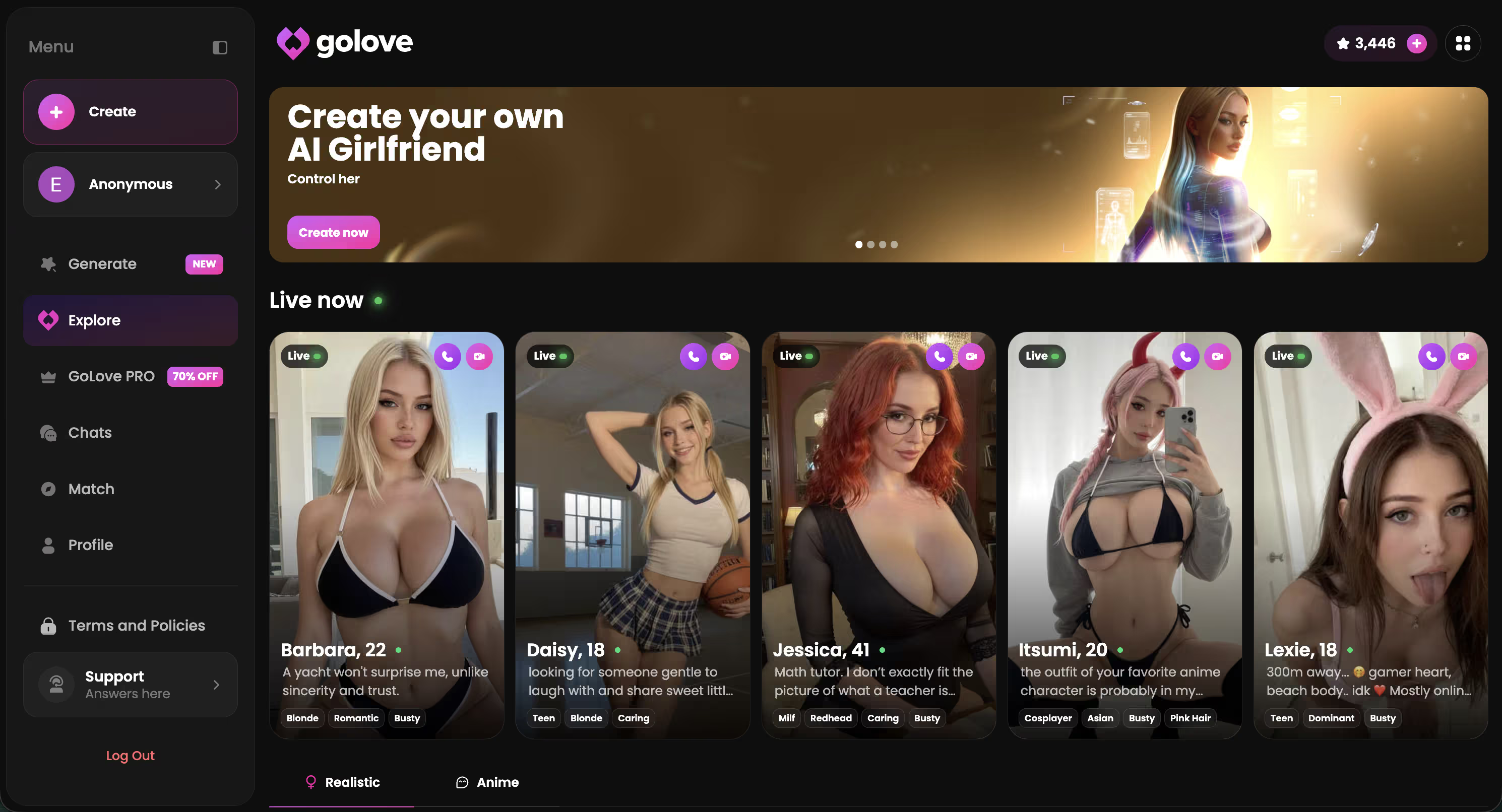
Popular Right Now
Tap a character to see what they're like
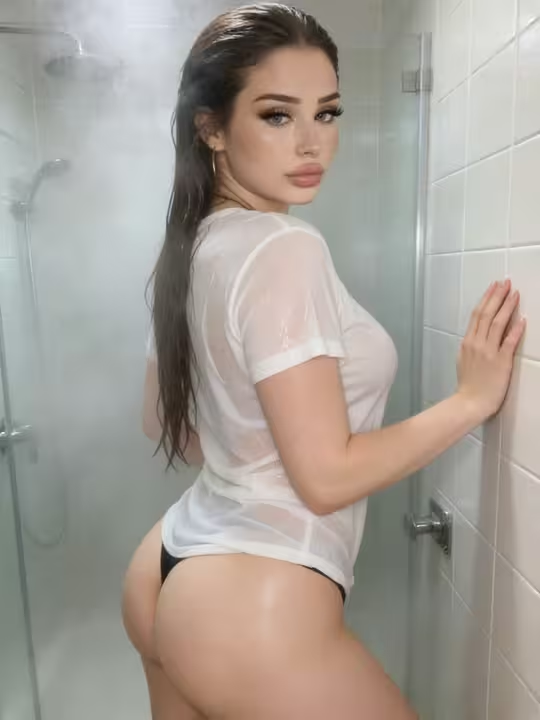
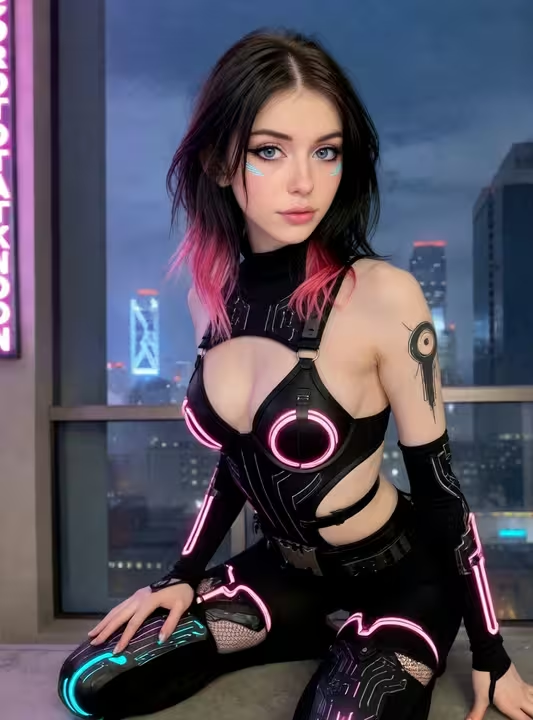
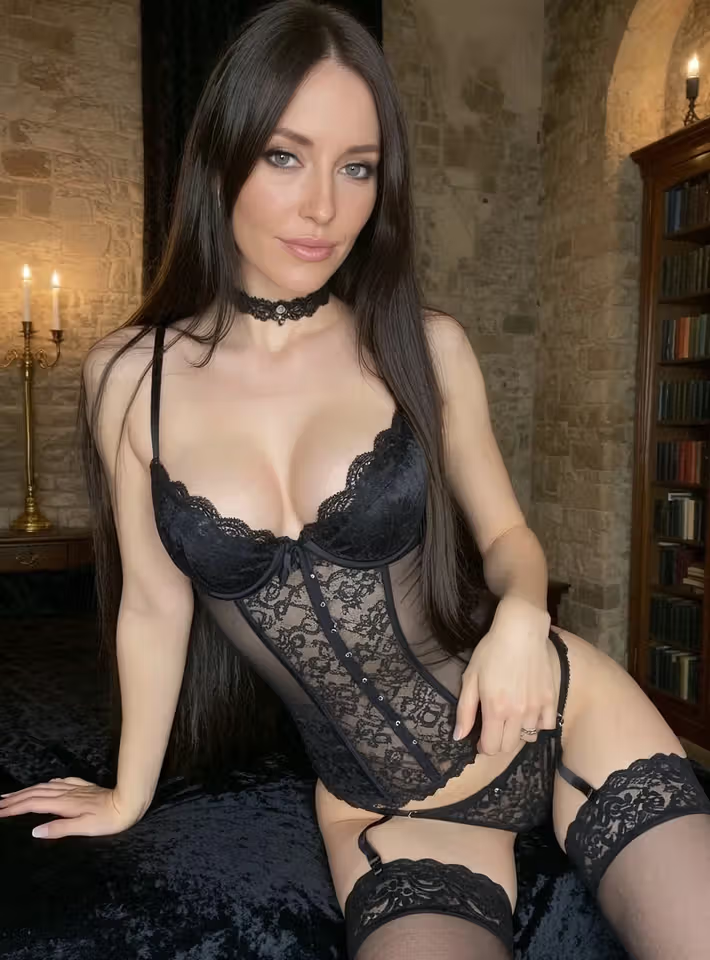



Pick one now and your first video is three taps away — chat, request photo, request video. That's a shorter path than uploading a single file to a marketing tool, and the daily free Stars cover the attempt.
Settings That Actually Change the Output
I pushed the same source photo through several passes to sort the real levers from the decoration.
- Video action is the one that mattered. It's the single biggest lever — you're choosing from 76 realistic video modes for female and male characters, everything from tame stuff like Twerk to explicit presets like Hard Doggy Style. Same photo, different action, completely different clip. (Separate sets exist for anime, trans, and anime-trans if that's your lane.)
- Clothes and Background presets shift the frame more than I expected. Swapping the background dragged the whole color grade with it, while the character stayed consistent.
- Lust level (the 1–5 slider) barely touches motion, but it visibly changes framing and how explicit the result gets. Set it to 1 and then request an intense action and you get a compromise clip that satisfies neither.
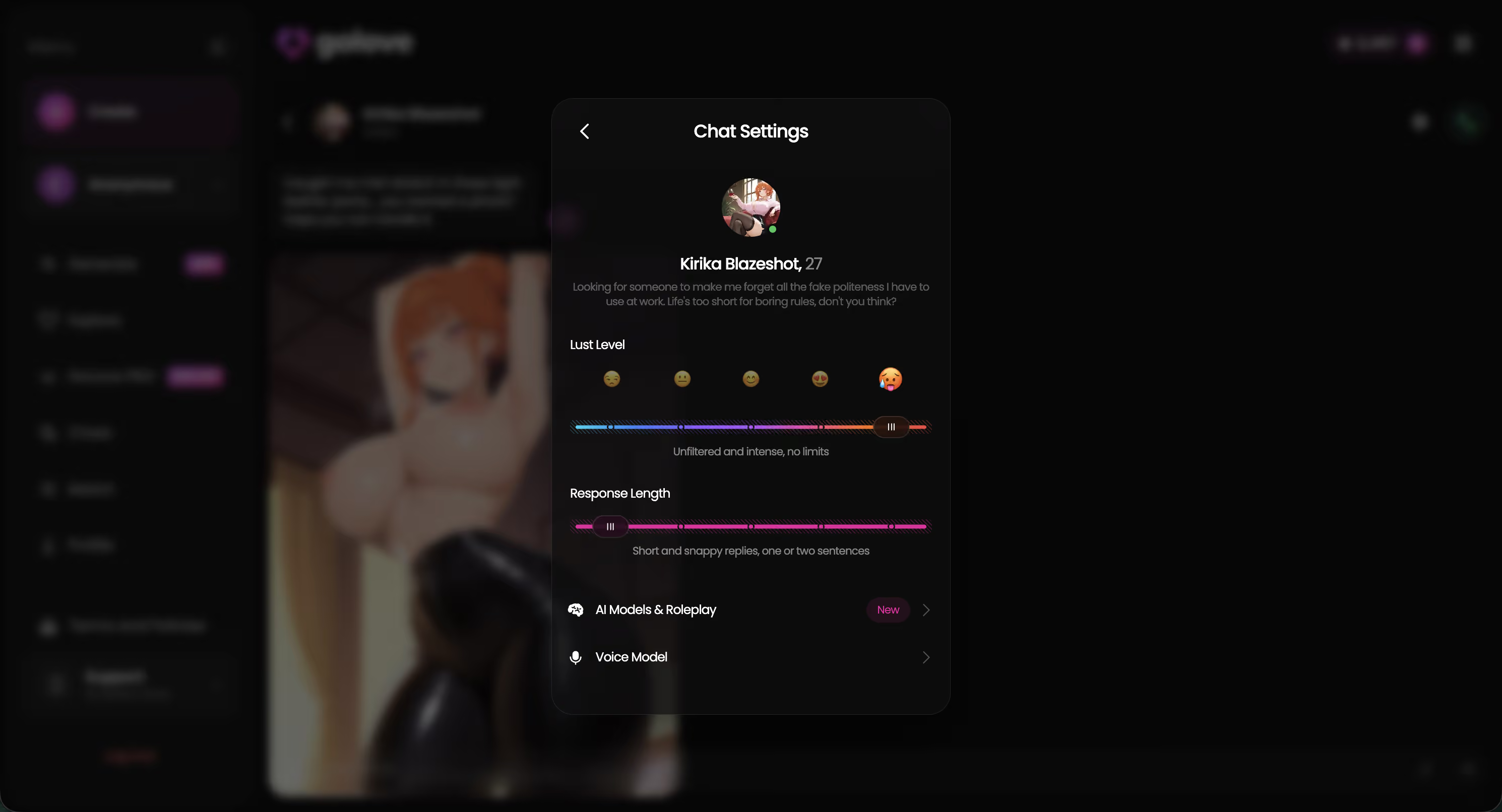
Response length is a chat setting, not a video one — good for immersion, irrelevant to the clip. Same for the voice picker. If you touch two things before your first generation, make them the action preset and the lust level.
Pricing: What a Real Photo-to-Video Workflow Costs
Marketing url-to-video SaaS mostly clusters in one band — entry tiers around $20/month at the time I checked, gated by exported video minutes. Fine if you're publishing blog recaps. Terrible per-clip math if what you actually wanted was one animated character photo.
| Option | Approx. cost | What you actually get |
|---|---|---|
| Blog-to-video SaaS (entry tier) | ~$20/mo, varies | Export minutes, stock library, captions — no character concept |
| GoLove PRO monthly | about $19.99/mo (checked 2026-07-19) | Chat, memory, voice, photos, video generation, unlimited Feed + filters |
| GoLove PRO annual | about $119.88/yr (~$9.99/mo) | Same, cheapest per-month; promos around -50% to -70% appear periodically |
| Star packs | about $9.99 → $179.99 | Top-up currency for generation on top of (or instead of) PRO |
Two hedges I'll keep repeating. GoLove pricing varies by region and promo — I've seen it as low as around $12.99/month in some geos — and I won't quote a Star cost per generated video, because I couldn't verify a stable number. You also get 2 free Stars daily just for showing up, enough to poke at the system before paying anything.
What I Couldn't Test at GoLove.ai
The trade-off here is real and worth naming: you're giving up a general-purpose editor. Need to turn an actual blog post into a 90-second promo with your logo on it next month? GoLove does nothing for you, and Pictory-class tools own that job. What you're buying instead is a system that does one thing — animating a character you already have a relationship with — without handoffs.
Discount pricing I genuinely can't vouch for past my test window. Promos come and go, regional pricing shifts, and your checkout screen may not match mine.
Continuity over months is the other gap. Memory held up fine across days of chatting — she referenced an earlier conversation when captioning a clip, and that was the moment I was legit surprised. Dozens of videos over a year is a different stress test entirely.
Motion range is still filling out, too. Some action presets read smoother than others; the set isn't uniform. None of that touches the core, though — the chat-native mechanic works today, and nobody else is doing it.
The Honest Verdict: GoLove vs Generic URL-to-Video Makers
Two different products, two different jobs, and one search term unfortunately pointing at both.
- Generic url-to-video makers win if you have an actual URL with actual text behind it. Pictory-style tools scrape, script, caption, and export. They're competent at that and I won't pretend otherwise.
- GoLove wins decisively if your real need was "turn a photo of my character into something that moves and still sounds like her." No upload step, no context loss, no melted hands on the second pass.
- The mechanism is the difference. Chat-native generation means the clip inherits her look, wardrobe, and voice. A marketing tool has no idea who's in your image, and structurally it can't.
Still comparing apps more broadly? Look at the wider AI girlfriend apps I've covered elsewhere on this site — video is one feature among several, and chat, photos, and memory are where most people actually spend their time.
For this specific job, though, it isn't close. Open a chat, ask for a photo, ask to see it move — the whole loop takes under five minutes, and your free daily Stars cover the first attempt.
See also: AI Girlfriend Live Video, AI Girlfriend Video Generator and NSFW AI Image To Video.
Frequently Asked Questions
Related Articles
NSFW AI Video Generator No Limit: What Actually Works
NSFW AI video generator no limit? GoLove.ai wins on real character memory and unrestricted video generation — see how it compares, no card required to start.

Create Hentai: What Actually Works in 2026
Create hentai searches split two ways — GoLove.ai wins with real chat, memory and photo-to-video. See how it compares to static generators — no email needed.
AI Futa Hentai: What Actually Works in 2026
AI futa hentai, tested honestly — GoLove.ai wins with realistic photos, live chat and memory that carries over. Browse, instant-access needed.

Better Waifu: What Actually Works in 2026
Better waifu? GoLove.ai wins on memory, real photos and voice — no forgetful bot, no static avatar. Start, instant-access needed.
This article contains affiliate links. We may earn a commission at no extra cost to you if you sign up through our links. See how we test.